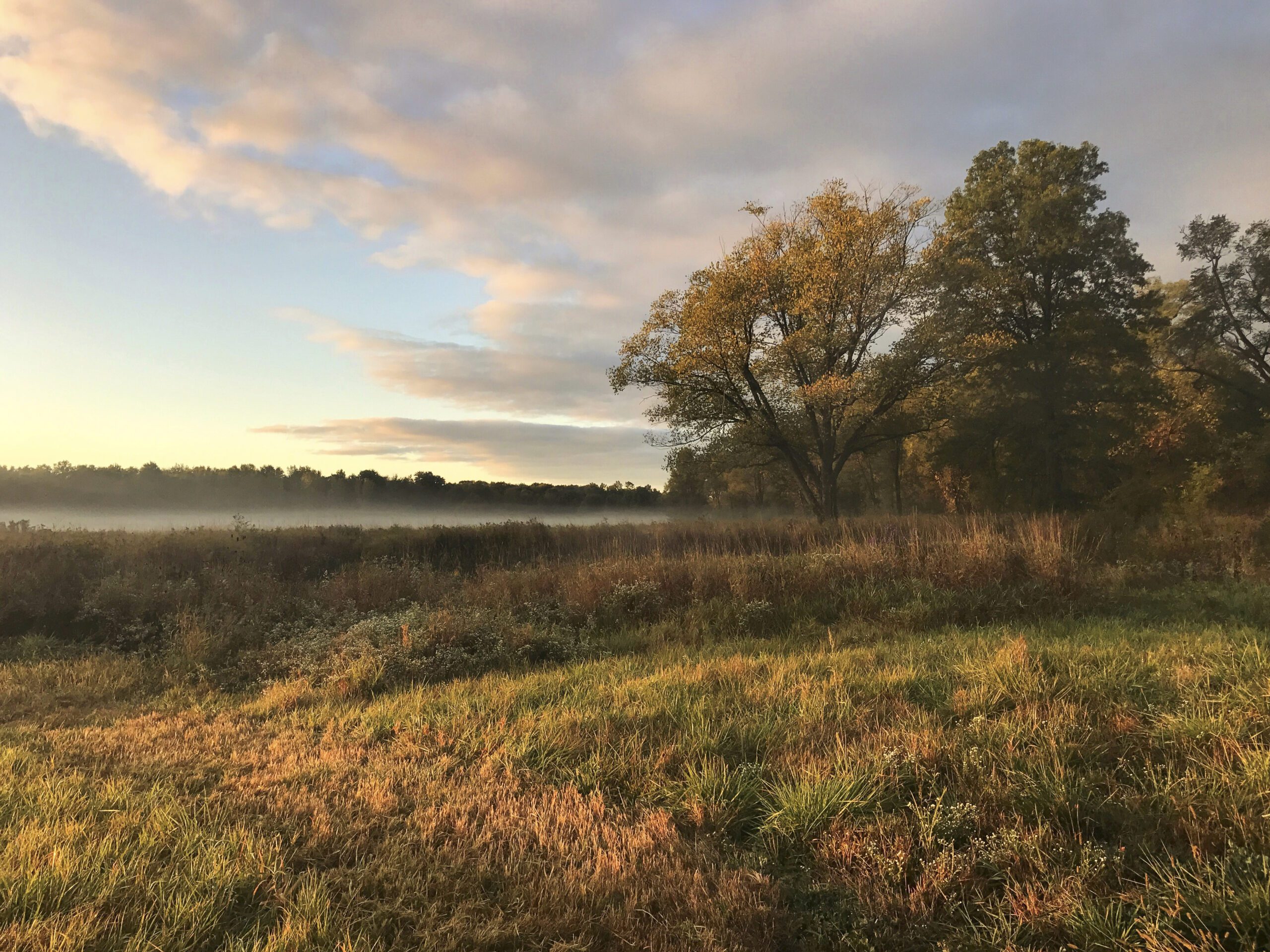


In the heart of northeast Ohio, where farm fields give way to woodlots and winding creeks, lies one of the most remarkable conservation success stories in the region. Grand Valley Ranch—1,477 acres of forests, marshes, and restored wetlands—stands as proof that nature can rebound when given the chance.
Two hundred years ago, this land was part of the vast Bloomfield Swamp, an ancient wetland teeming with wildlife. But in 1913, settlers drained it with the construction of the Snyder Ditch, exposing rich soils that fueled decades of vegetable production. For much of the 20th century, onions, sod, and even topsoil itself were harvested here. By the 1990s, the property faced the threat of becoming an industrial dump site.
The story could have ended there. Instead, local citizens, township leaders, and the Western Reserve Land Conservancy stepped in. In 2011, the Land Conservancy secured the property with an ambitious purchase—1,100 acres of wetlands, farm fields, meadows, and forests. Over the next five years, through a mix of determination, community cooperation, and a patchwork of federal, state, and local conservation grants, the land was permanently protected. By 2016, the Land Conservancy had expanded the project to 1,477 acres, creating the largest wetland complex under its ownership.
Grand Valley Ranch doesn’t just stand on its own. It is part of a massive, 15-mile conservation corridor that stretches north to Mosquito Creek Wildlife Area and Mosquito Lake State Park—together protecting more than 9,000 acres of habitat for waterfowl, raptors, and countless other species.
Today, shallow wetlands glisten where fields once lay bare. Young tamarack trees—once a defining feature of the landscape—are taking root again. Northern harriers and sandhill cranes sore over the meadows, while trumpeter swans and flocks of migrating ducks settle on the waters. More than 18 state-listed species now call the “Ranch” home.
At the heart of the project is water. Through a carefully designed system of water-control structures and ditch plugs, Land Conservancy staff have reversed decades of drainage. Instead of racing off into Snyder Ditch, water now spreads slowly across three miles of wetlands, filtering sediment and nutrients before they reach the State Scenic Grand River, and ultimately Lake Erie. These restored wetlands not only improve water quality but also buffer local communities from floods.
Grand Valley Ranch is also a story of compromise and collaboration. The Conservancy worked closely with township leaders to balance local needs with ecological goals. Portions of land were set aside for residential homes to strengthen the tax base, while prime farmland was sold and preserved with agricultural easements for local farmers. A small industrial expansion supported jobs, and a five-acre parcel was reserved to secure future drinking water for a nearby village.
Today, the Ranch is alive with activity. It hosts events, serves as a field station and regional office for the Land Conservancy, and welcomes visitors for tours, hunting programs, and conservation events. Restoration continues, with more tallgrass prairie and wetlands being created each year.
Grand Valley Ranch is more than a Signature Preserve—it is a model for how large-scale conservation can succeed when science, persistence, and community come together. It shows that even landscapes once written off as “the swamp” or “muck ground” can become vibrant strongholds of biodiversity and sources of food and clean water.
As one Land Conservancy staff member put it, “If you create it, they will come. And here, they have.”
To learn more about Grand Valley Ranch or one of our other properties, contact the Land Conservancy today.